Press release , Sep 08, 2026
Gas Supply: Customers Can Rely on Contractual Commitments
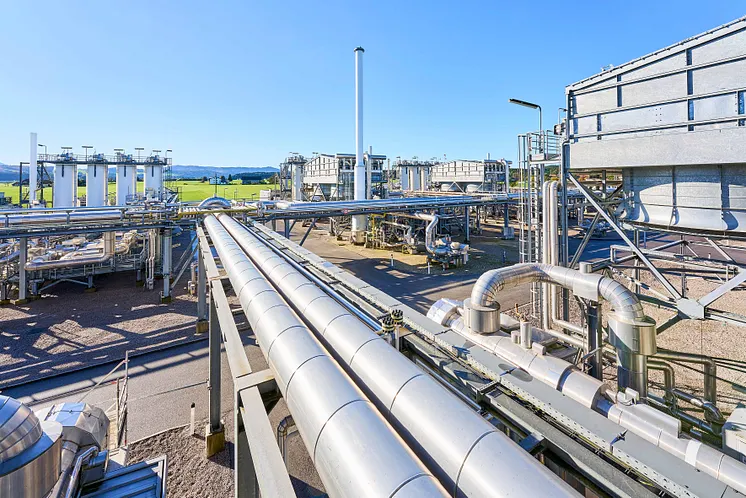
- Low storage levels do not automatically mean a shortage of gas—supply contracts, storage facilities, pipeline imports and LNG work together.
- LNG terminals, new import routes and extensive reverse-flow capabilities have strengthened the resilience of the infrastructure.
- Kehler: “The key point is this: anyone who has a contract with a gas supplier will receive their gas. To increase resilience in times of crisis, policymakers must now facilitate injections into storage and, in particular, eliminate the legal risks associated with implementing the EU Methane Regulation.”
At around 55 percent, Germany’s gas storage facilities are currently at their lowest level since comparable records began. At the same time, the political debate about how Germany can safely make it through the coming winter is intensifying. However, Die Gas- und Wasserstoffwirtschaft (the German Gas and Hydrogen Industry), warns against taking too narrow a view: storage levels alone do not determine security of supply. Supply contracts, storage facilities, pipeline imports and LNG work together. Furthermore, Germany’s gas infrastructure is now considerably more resilient than it was in 2022.
The unusually low storage levels are currently causing concern. They are an important indicator of preparations for the winter, but they do not provide a complete picture of the supply situation. What matters is whether sufficient gas has been procured and whether it can be transported to and through Germany via high-capacity infrastructure. Suppliers and traders secure their delivery obligations through various channels: long-term supply contracts, short-term procurement, pipeline gas, LNG and stored volumes.
Dr Timm Kehler, CEO of the association Die Gas- und Wasserstoffwirtschaft, therefore makes clear: “Anyone who has contractually secured their gas requirements for the winter with a reliable supplier can count on receiving the agreed volumes. An unfavourable summer-winter spread may make additional injections into storage less economically attractive, but it does not cancel existing delivery obligations.” The futures markets are also not currently indicating an anticipated volume shortage towards the end of the winter. At the same time, the volumes required to fulfil existing delivery obligations are being procured and placed in storage.
Germany is now also in a considerably more robust position than it was at the beginning of the energy crisis in 2022. The industry has invested in LNG terminals, new import routes and the capacity of the gas networks. The reversal of gas flows was particularly fundamental: for decades, the German network was designed primarily to transport large volumes of Russian gas from east to west. Following the loss of these supplies, the technical conditions required to transport gas in the opposite direction were established at numerous points. These reverse-flow capabilities now allow gas from western and southern import points to be distributed much more flexibly throughout Germany and Europe. They also provide broad access to European storage capacity.
“We must not play down the low storage levels. But neither are they evidence that Germany is facing a supply shortfall. Since 2022, the industry has made substantial investments and diversified its supply routes. Policymakers must now facilitate injections into storage while also eliminating regulatory risks affecting imports,” says Kehler. In the short term, this could include removing unnecessary costs associated with the use of storage facilities. One example is the conversion levy, a surcharge used to offset the costs arising from differences in gas quality.
Gas storage facilities remain an important component of security of supply. Traders and suppliers store volumes of gas there in order to fulfil existing delivery obligations to their customers. Storage facilities also provide an additional buffer against unforeseen events, such as technical failures or disruptions to import routes. In view of current market conditions, it therefore makes sense to facilitate additional injections into storage. As the planned strategic gas reserve will not be available until next year, incentives must be created to ensure that sufficient volumes remain available for the second half of the winter. This strengthens security of supply, particularly during late cold spells, and provides additional flexibility for industrial and commercial customers that procure gas on the market at short notice.
At the same time, policymakers must not make gas procurement unnecessarily difficult. The European Methane Regulation and unresolved questions surrounding its implementation continue to create considerable legal uncertainty for importers. This applies particularly to long-term supply relationships, which are important for ensuring reliable supplies in an environment increasingly shaped by the global LNG market. The German Federal Government and the European Commission must therefore quickly establish clear and practicable conditions as well as a legally secure transitional solution.
Finally, a resilient supply system also requires the use of available domestic gas resources wherever this is economically viable and possible under stringent environmental standards.
