Press release , Jun 11, 2026
Freedom of Choice Instead of Rigid Requirements: GModG Will Make the Heating Transition in Existing Buildings Practical
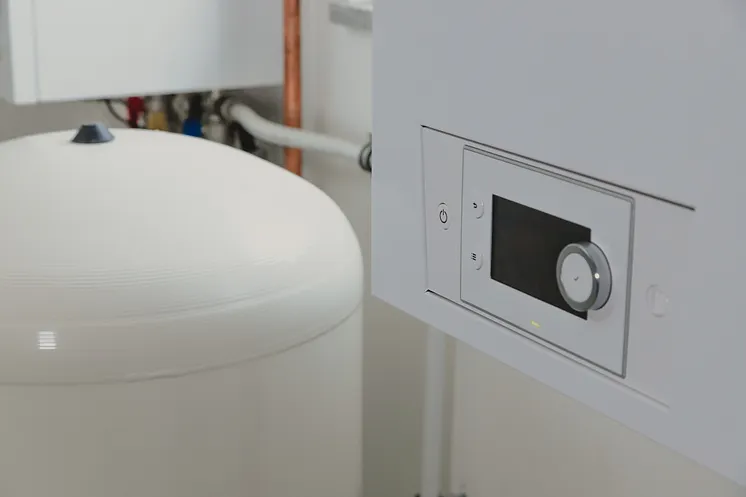
- GModG replaces rigid detailed requirements with greater freedom of choice when replacing heating systems and opens the way for green gases into the heating market.
- Particularly in existing buildings, the law can bring practical feasibility, CO₂ reduction and affordability more closely together.
- Kehler: “Climate action in the boiler room only works if people have affordable and practicable options.”
The planned Building Modernisation Act (Gebäudemodernisierungsgesetz, GModG) will be debated in the Bundestag today in its first reading. From the perspective of the association Die Gas- und Wasserstoffwirtschaft, the draft law can make an important contribution to refocusing the heating transition in existing buildings more strongly on practical feasibility, CO₂ reduction and affordability. What matters now is that the new rules remain easy to implement and do not become more complex again through additional verification and billing obligations.
The Building Modernisation Act is intended to fundamentally revise the current Building Energy Act. In future, owners should once again have greater freedom to decide which type of heating system is best suited to their building. Alongside heat pumps, district heating, biomass and innovative solutions such as hybrid heating systems, gas heating systems will therefore remain possible, provided that from 2029 onwards they use gradually increasing shares of carbon-neutral fuels.
In Germany, almost 14 million gas heating systems are in operation, supplying around 56 percent of all homes. For this very reason, the heating transition requires solutions that can actually be implemented in existing buildings. Narrowly defined detailed requirements have unsettled many owners in recent years and delayed modernisation decisions. The GModG addresses this by opening up broader options for action and integrating green gases such as biomethane and, in future, hydrogen more strongly into the heating market.
Dr Timm Kehler, Chairman of the association Die Gas- und Wasserstoffwirtschaft, explains: “The Building Modernisation Act can turn the deadlocked heating debate back into a modernisation debate. The heating transition needs ambitious climate action, but it must also fit the reality of millions of boiler rooms. Opening up practicable pathways for owners gets modernisation moving again, reduces CO₂ emissions and strengthens acceptance of climate action.”
A central element of the draft law is the so-called “Bio-Treppe”. Under this approach, newly installed heating systems powered by gas, heating oil or liquefied petroleum gas will initially have to generate at least 10 percent of the heat provided from biomethane, bio-oil, biogenic liquefied petroleum gas, hydrogen or derivatives produced from these fuels from 2029 onwards. This is to be accompanied by the introduction of a green gas quota or green heating oil quota.
From the perspective of Die Gas- und Wasserstoffwirtschaft, this approach is the right one because it organises climate action more strongly via energy suppliers and makes practical implementation easier for consumers. Similar to electricity, not every individual household should have to organise the procurement of renewable energy itself. Instead, suppliers must gradually bring growing shares of green gases into the system.
“A well-designed green gas quota combines climate action with everyday practicality,” says Kehler. “It ensures that more renewable energy is gradually used in the gas grid as well. The necessary volumes are achievable if domestic potential, investment and European import opportunities are consistently utilised. Concerns about sharply rising grid fees also fall short: the gas grid will remain relevant for heating, commerce and industry. What matters is a resilient mix of heat pumps, hybrid heating systems, district heating, biomethane and, in future, hydrogen.”
Hybrid solutions can play an important role in existing buildings. The combination of an existing gas condensing boiler and a heat pump enables many households to make a pragmatic start on electrification without prematurely abandoning existing infrastructure. According to calculations by the association, gas consumption in the building sector can fall significantly by 2045 through building modernisation measures, more efficient heating systems and greater use of hybrid systems.
From the association’s perspective, the specific design remains critical. The Bio-Treppe, green gas quota, verification obligations, tenant protection and funding logic must be interlinked in such a way that no new regulatory overcomplexity emerges. Protecting tenants from excessive ancillary costs is the right approach. However, it must not lead to a billing and verification regime that creates additional uncertainty for landlords, suppliers and consumers. Additional regulation is not convincing, particularly when it comes to grid costs: the gas grid is an existing, widely used infrastructure that is comparatively cost-effective to operate. An additional allocation of grid costs would primarily create bureaucracy rather than making the heating transition in existing buildings easier.
“The draft law is an opportunity for a fresh start in the heating transition in existing buildings,” Kehler emphasises. “But for this to succeed, the law must not be overloaded with detailed requirements again in the final stretch. The Bio-Treppe, green gas quota, tenant protection and rules on grid costs must be designed in a simple, comprehensible and investment-friendly way. Otherwise, exactly the kind of uncertainty will arise that the Building Modernisation Act is actually intended to overcome.”
In this context, Die Gas- und Wasserstoffwirtschaft once again refers to its position paper on the key points of the Building Modernisation Act. In it, the association explains why freedom of choice, a green gas quota, hybrid solutions and the realistic integration of existing infrastructure are key prerequisites for a successful heating transition in existing buildings.
