News , Apr 08, 2026
Volvo Trucks Unveils New hydrogen Truck
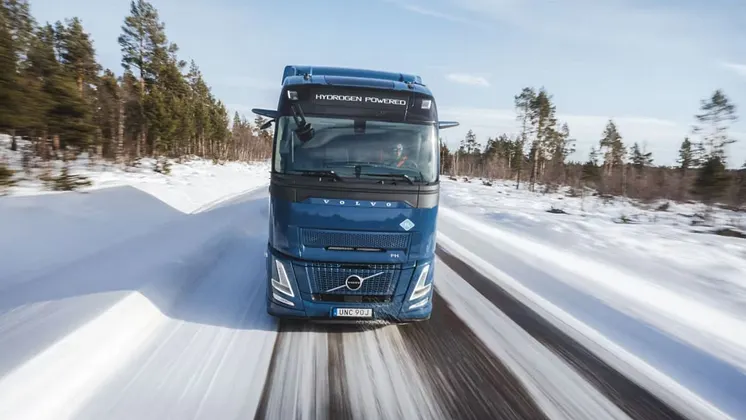
With real-world testing of heavy-duty trucks powered by hydrogen combustion engines, Volvo Trucks is taking another step toward CO₂-neutral transport solutions. Volvo’s hydrogen-powered trucks are set to establish new benchmarks in performance – offering higher energy efficiency, lower fuel consumption, and greater engine power than conventional hydrogen combustion technologies.
The foundation for this is High Pressure Direct Injection (HPDI). In this process, a small amount of ignition fuel is injected at high pressure to initiate compression ignition before hydrogen is introduced. Volvo is already successfully using this technology in gas-powered trucks, with more than 10,000 units sold worldwide.
“Road testing marks an important milestone for our hydrogen combustion engine trucks. I am confident they will rank among the best solutions on the market in terms of fuel efficiency, performance, torque, and drivability. Customers can essentially use them just like diesel vehicles. Our extensive experience with more than 10,000 gas-powered HPDI trucks clearly demonstrates the potential of this technology,” emphasizes Jan Hjelmgren, Head of Product Management at Volvo Trucks.
Hydrogen combustion engine trucks are particularly well suited for long-haul transport and for regions where charging infrastructure is limited or where there is little time to charge battery-electric vehicles.
When powered by green hydrogen and supplemented with renewable HVO as ignition fuel, Volvo trucks have the potential to operate in a near CO₂-neutral manner on a well-to-wheel basis. Under current EU CO₂ regulations, they are classified as “Zero Emission Vehicles” (ZEV).
This advanced hydrogen engine technology is based on a proven diesel powertrain and delivers diesel-like performance with significantly reduced CO₂ emissions.
Hydrogen combustion engine trucks complement Volvo Trucks’ existing portfolio of low- and zero-emission powertrain options, including battery-electric trucks, fuel cell trucks, as well as trucks powered by renewable fuels such as biogas and HVO.
“We see great potential for hydrogen combustion engine trucks. They will play an important role on the path to emission-free transport. Multiple technologies will be required for decarbonization. As a global manufacturer, we offer a range of solutions and support our customers in finding the right option—depending on application profile, infrastructure, and energy prices,” Jan Hjelmgren adds.
Facts about Volvo Trucks’ hydrogen combustion engine trucks:
- Volvo’s hydrogen-powered trucks will use HPDI (High Pressure Direct Injection) technology from Cespira: www.cespira.com
- Hydrogen trucks will offer ranges that exceed the daily requirements of many customers
- Due to the very low CO₂ emissions from hydrogen combustion, these vehicles are classified as “Zero Emission Vehicles” under EU CO₂ regulations
- Hydrogen can also be used in fuel cell trucks, where electricity is generated directly onboard and only water vapor is emitted
- Volvo Trucks plans to bring fuel cell trucks to market in limited volumes before 2030
- Volvo Trucks’ three-pronged strategy to achieve net-zero emissions includes battery-electric powertrains, fuel cell systems, and combustion engines powered by renewable fuels


