News , Sep 23, 2026
Three Questions to Nina Scholz, Equinor
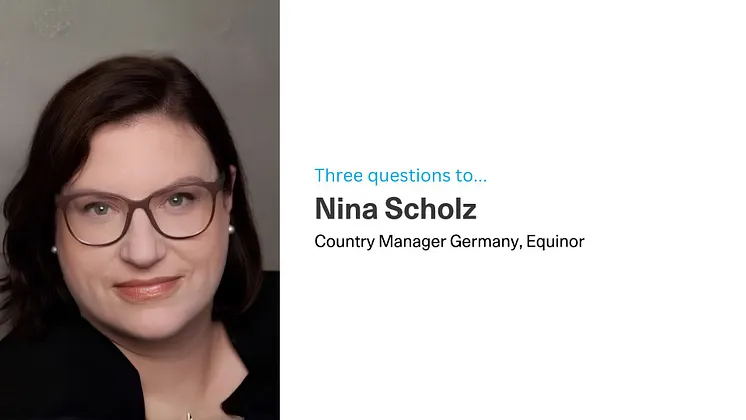
Norwegian gas supplier Equinor is an important partner for Germany’s energy supply. In our “Three questions for” series, Nina Scholz, Country Manager Germany at Equinor, discusses methane emissions management, the implications of the EU Methane Regulation for gas supplies, and what is needed for practical implementation.
-
What does the EU Methane Regulation mean for Equinor’s gas supplies to Germany?
The EU Methane Regulation significantly increases the requirements for reporting and verifying methane emissions along the supply chain for all gas imports into the European Union.
Equinor supports the EU Methane Regulation’s objective of reducing methane emissions. However, uncertainty remains around certain provisions. In particular, applying the requirements to complex value chains, facilities not operated by Equinor, and gas supplies from third countries currently raises practical and legal questions.
Unclear implementation requirements and a lack of necessary structures expose suppliers and importers to unavoidable compliance risks, while the absence of harmonised implementation rules across Europe creates additional reporting obligations. In the medium to long term, this could also affect Europe’s and Germany’s access to important gas supplies.
-
How does Equinor measure and reduce methane emissions along the value chain?
Equinor monitors methane emissions through direct measurements, on-site inspections, and advanced monitoring and measurement technologies. To reduce emissions, we focus on early leak detection and repair, limiting venting and flaring, continuously improving our operations, and investing in new technologies.
In 2024 and 2025, Equinor’s methane intensity was around 0.01 per cent, among the lowest levels in the global oil and gas industry. The CO₂ intensity of Norwegian pipeline gas was 0.9 g CO₂e/MJ in 2025. The low greenhouse gas footprint of gas from the Norwegian continental shelf is also documented through the blockchain-based platform “Attributes SAS”. This provides customers with transparent information on emissions associated with production and transport.
-
What is needed to ensure effective and practical implementation of the EU Methane Regulation?
For the regulation to achieve its objectives, the requirements must be clear, consistent across the EU, and workable in practice. They should be based on recognised international standards for emissions measurement and provide legal certainty for suppliers, importers, and national authorities.
Implementation should focus on enabling actual methane reductions while safeguarding Europe’s energy supply and competitiveness. The proposed three-year postponement of the import requirements under Chapter V, combined with an impact assessment and targeted simplifications of the rules, could offer a viable path towards greater legal certainty. At the same time, this would give the EU, its Member States, and industry the time needed to establish the necessary systems and processes.


