News , Nov 23, 2026
Three Question to Prof Dr Albert Moser, RWTH Aachen
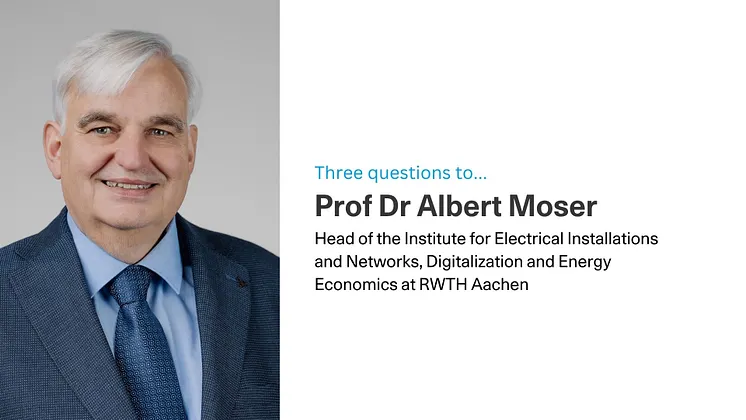
At the beginning of the month, the Innovation Award for New Gases was presented. We award it jointly with the DVGW and BDEW associations. What does this year’s award tell us about the industry’s progress in innovation? And how are new gases changing energy infrastructure? We discuss these questions with the jury chair, Prof. Dr. Albert Moser, Head of the Institute for Electrical Installations and Networks, Digitalization and Energy Economics at RWTH Aachen. The interview also explores the role of innovation in ensuring a secure energy supply and achieving climate neutrality.
-
What did this year’s Innovation Award for New Gases reveal about the industry’s progress in innovation?
My conclusion is that the industry is delivering. The nominated projects aren’t just concepts on paper: they’re up and running, close to commissioning, or have been tested in real facilities. A notable example of pragmatism in working with existing infrastructure is a drone-assisted pipeline inspection that significantly reduced the amount of excavation needed along a long-distance gas pipeline. Other examples include fuel-flexible equipment and practical integration of electricity and gas, such as a methanation process that responds to the available supply of electricity.
-
How are new gases changing the way energy infrastructure is planned and operated?
In the future, new gases will require what are now separate system plans to be developed together. The locations of power plants, electrolyzers, and storage facilities will help determine whether energy flows through electricity grids or pipelines carrying molecules. Around 60 percent of the hydrogen core network is being built by converting natural gas pipelines, so the phase-out of natural gas infrastructure and the expansion of hydrogen infrastructure need to be planned together. The new gas-fired power plants selected in tenders by the Federal Network Agency are expected to run on hydrogen by 2045. Their locations therefore need to align with the electricity grid, natural gas connections, and potential future hydrogen connections.
-
What role will innovation play in securing energy supplies and achieving climate neutrality?
Innovation will determine whether renewable gases can meet not only climate goals, but also the requirements for security of supply and affordability. Modern technologies can provide dispatchable power during periods of low wind and solar generation, storage for weeks and across seasons, and more diverse supply routes, for example via ammonia. These all contribute to security of supply. Solutions that make further use of existing infrastructure help save investment and keep energy affordable. For example, flexible facilities that run on natural gas today need to be able to use climate-neutral gases in the future. This applies to transmission infrastructure, gas-fired power plants, and gas-consuming equipment.


